INDUSTRIAL POLICY IN OTHER COUNTRIES
Asian countries
Asian countries with a long and successful tradition of industrial policy such as Japan, South Korea and China.
Western countries
The first group of countries has started from a central assumption, which is to disregard Western economic theories of a liberal nature, which for decades have been against government intervention in the composition and development of their respective industrial bases. On the contrary, their fundamental economic thesis has been that for the development of their countries it was necessary to boost the industrial sector through the leadership in some cases, and intervention in others, of their respective governments.
The second group of countries has been heavily influenced by the liberal theories that have been in vogue in the West since the 1980s and, in particular, by the economic theories promoted by the so-called Washington Consensus. These theories have also had a considerable influence on many developing countries through multilateral agencies such as the International Monetary Fund (IMF), with results that cannot be considered satisfactory.
The consequence of the decades-long application of these two economic models has been a very significant loss of the industrial and technological fabric of the West to Asian countries.
But as discussed in the tab "Industrial policy in Spain: past and future", the economic success of certain Asian countries and the realisation of the economic, technological and even security weaknesses in certain basic supplies of Western countries has led these countries to react to this situation.
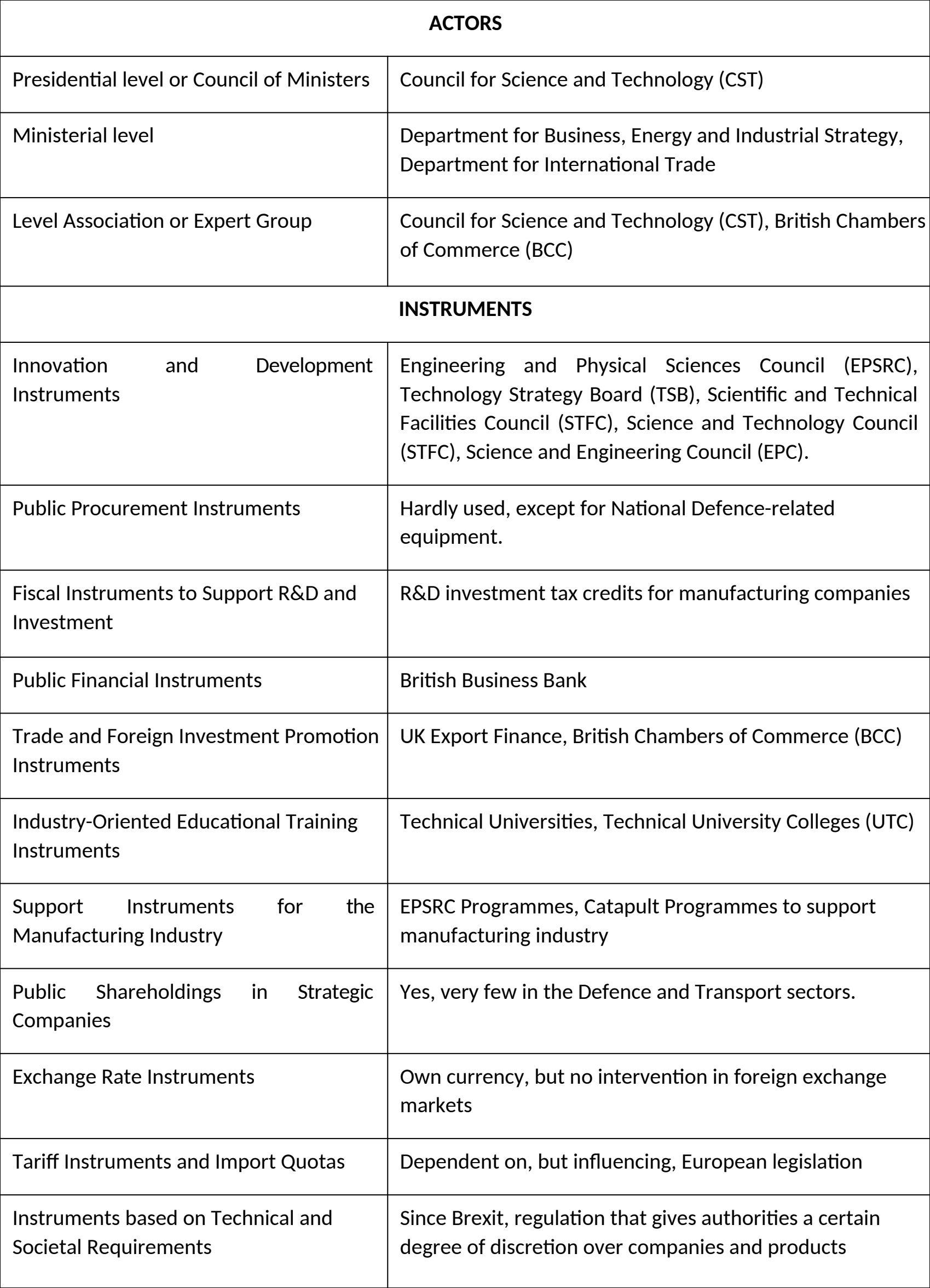
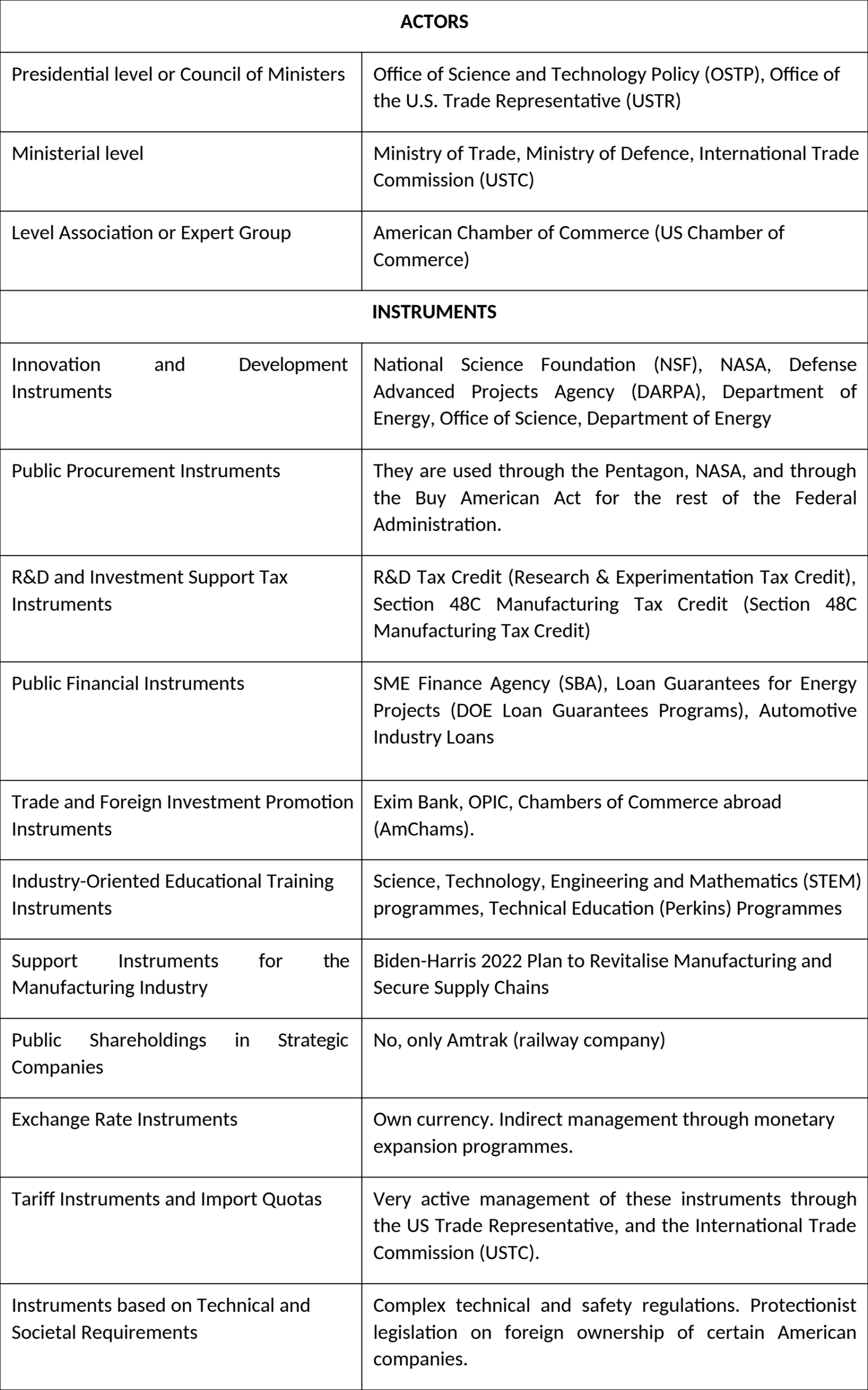
In the last 10 years, countries with a long and deep liberal tradition such as the US and the UK have changed their economic strategy and are increasingly applying industrial policies aimed at guaranteeing the supply of numerous products considered essential for their economic prosperity, through a strategy of reindustrialisation. It should be noted that the US is a special case within the group of Western countries, since for reasons of national security it has historically maintained a policy of promoting its own industry in the defence sector.
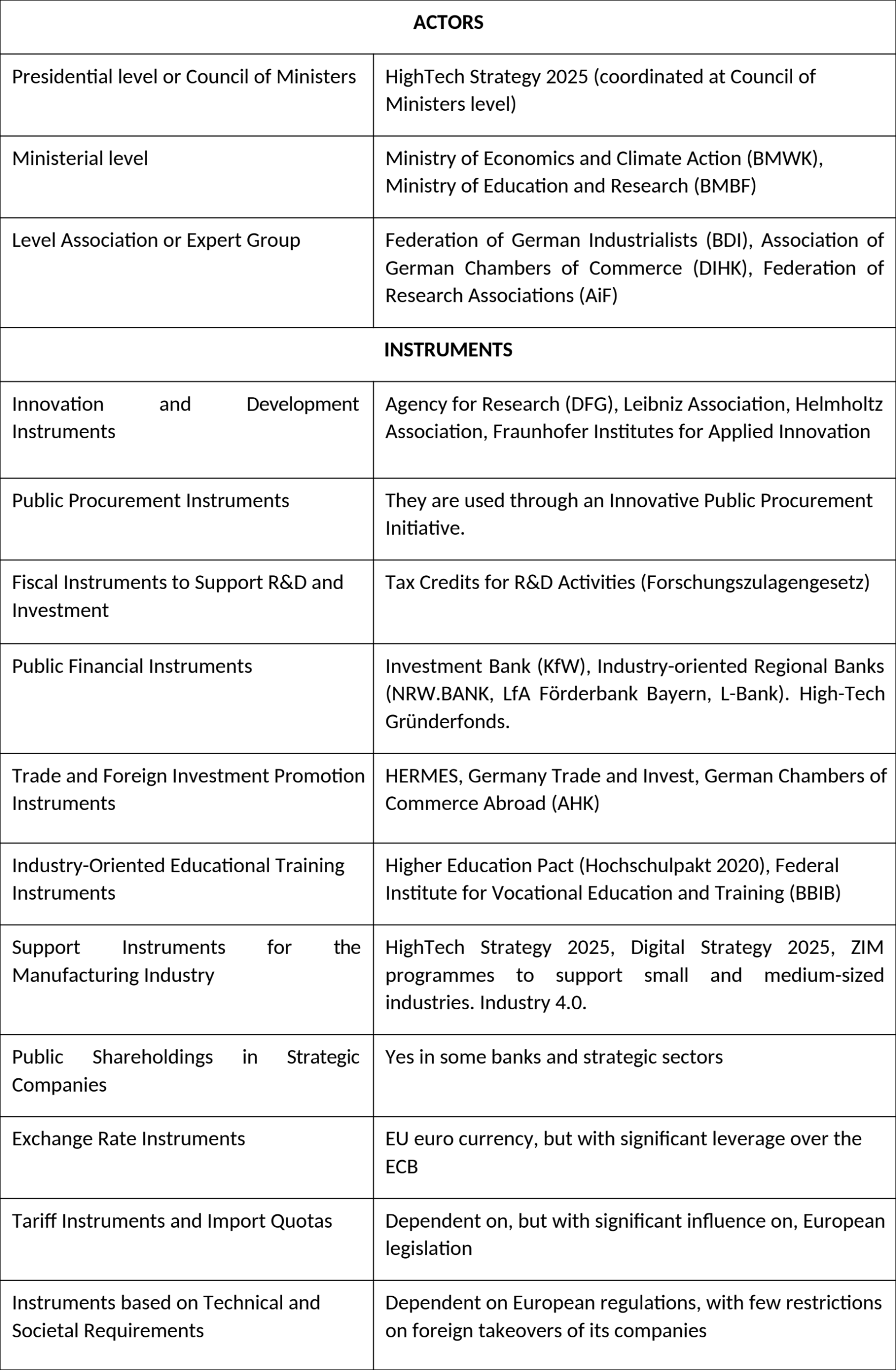
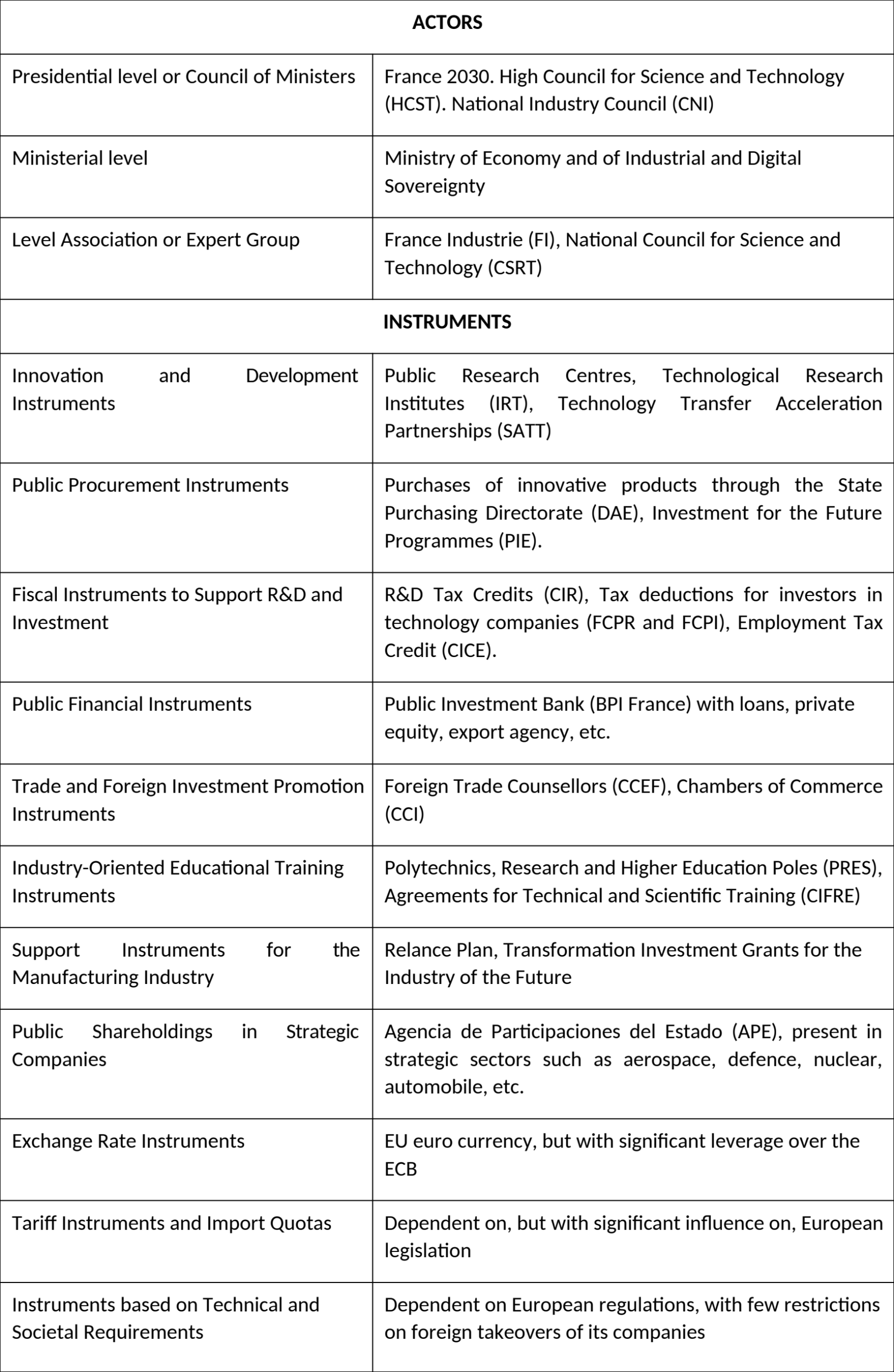
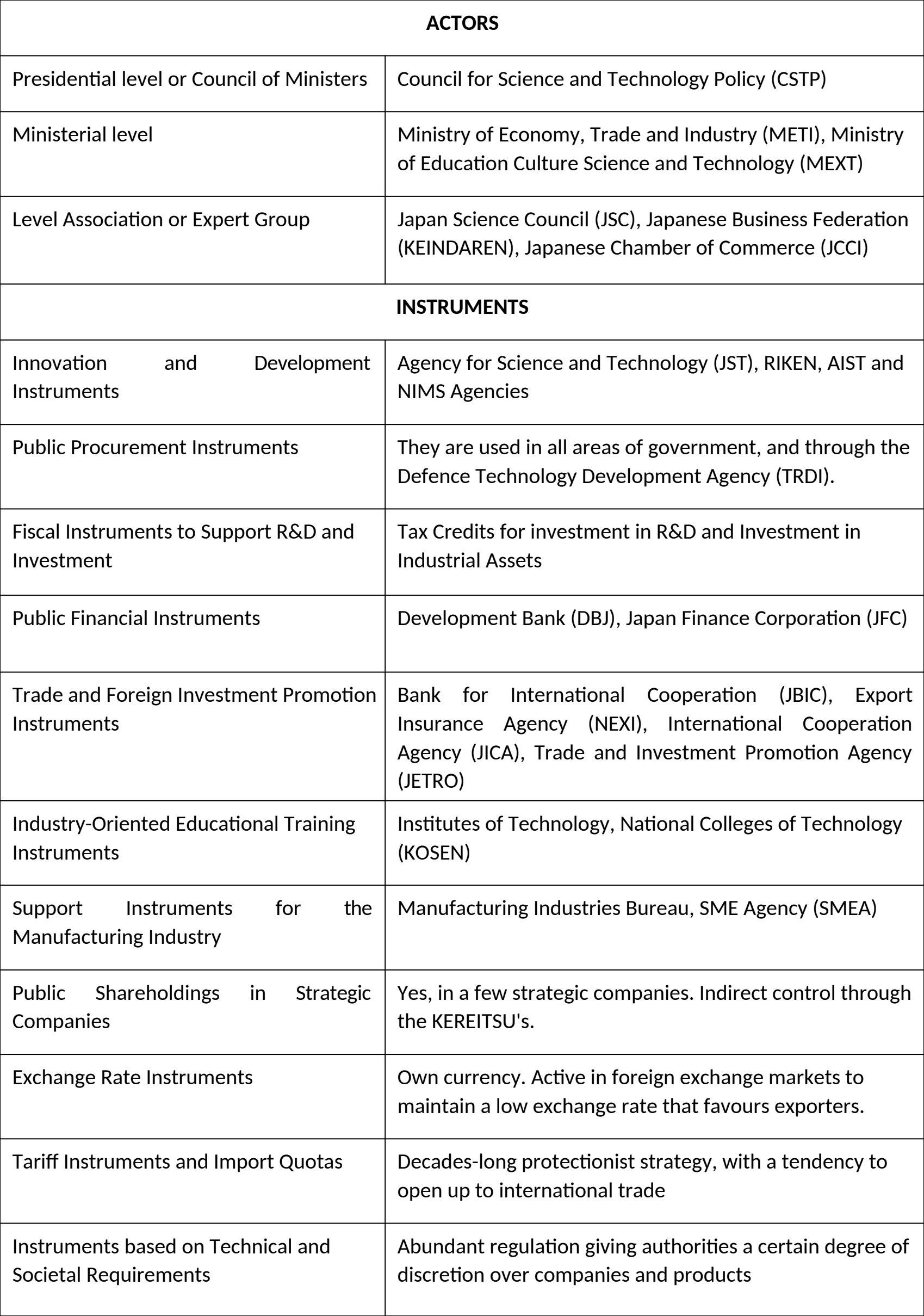
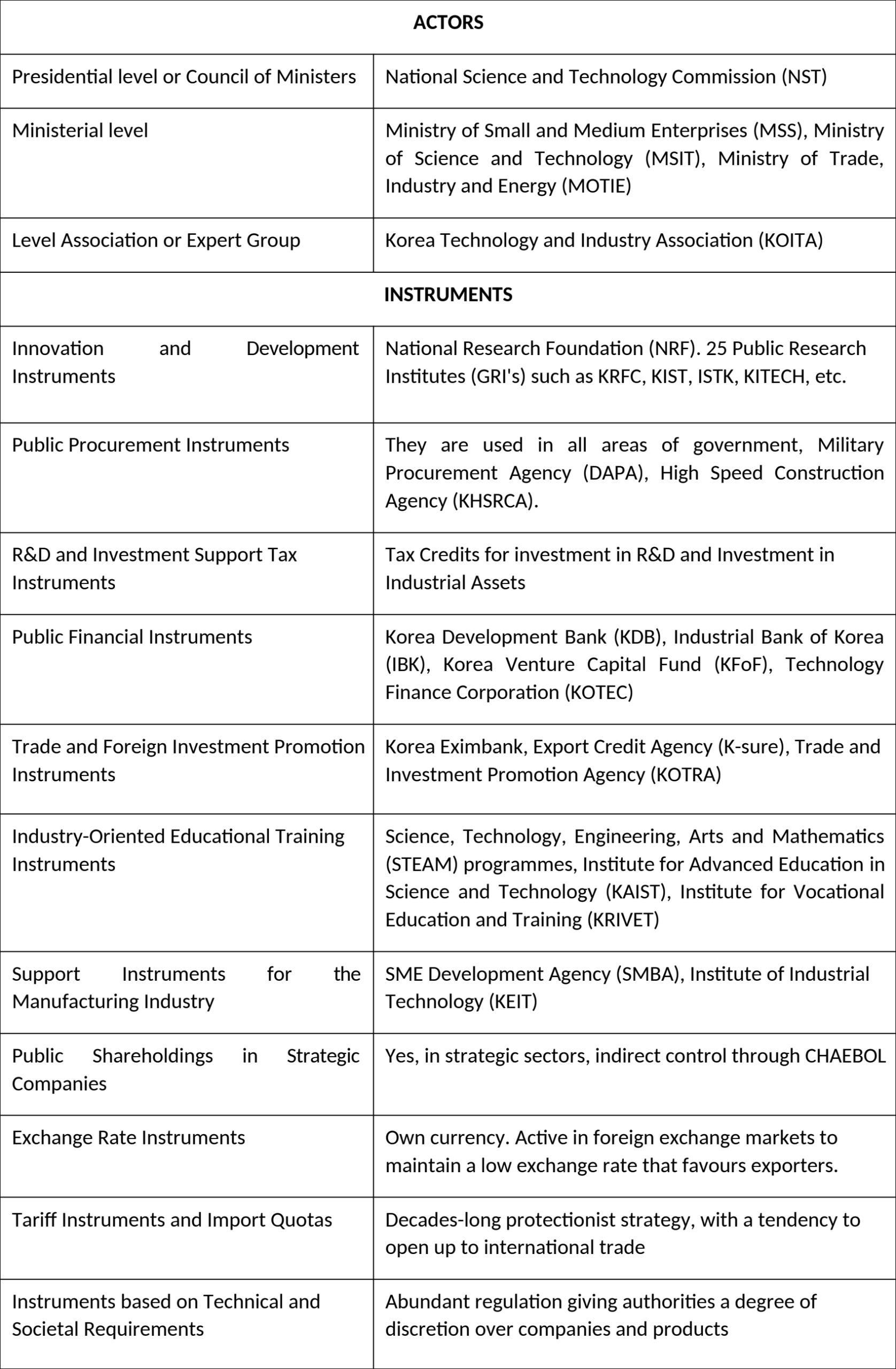
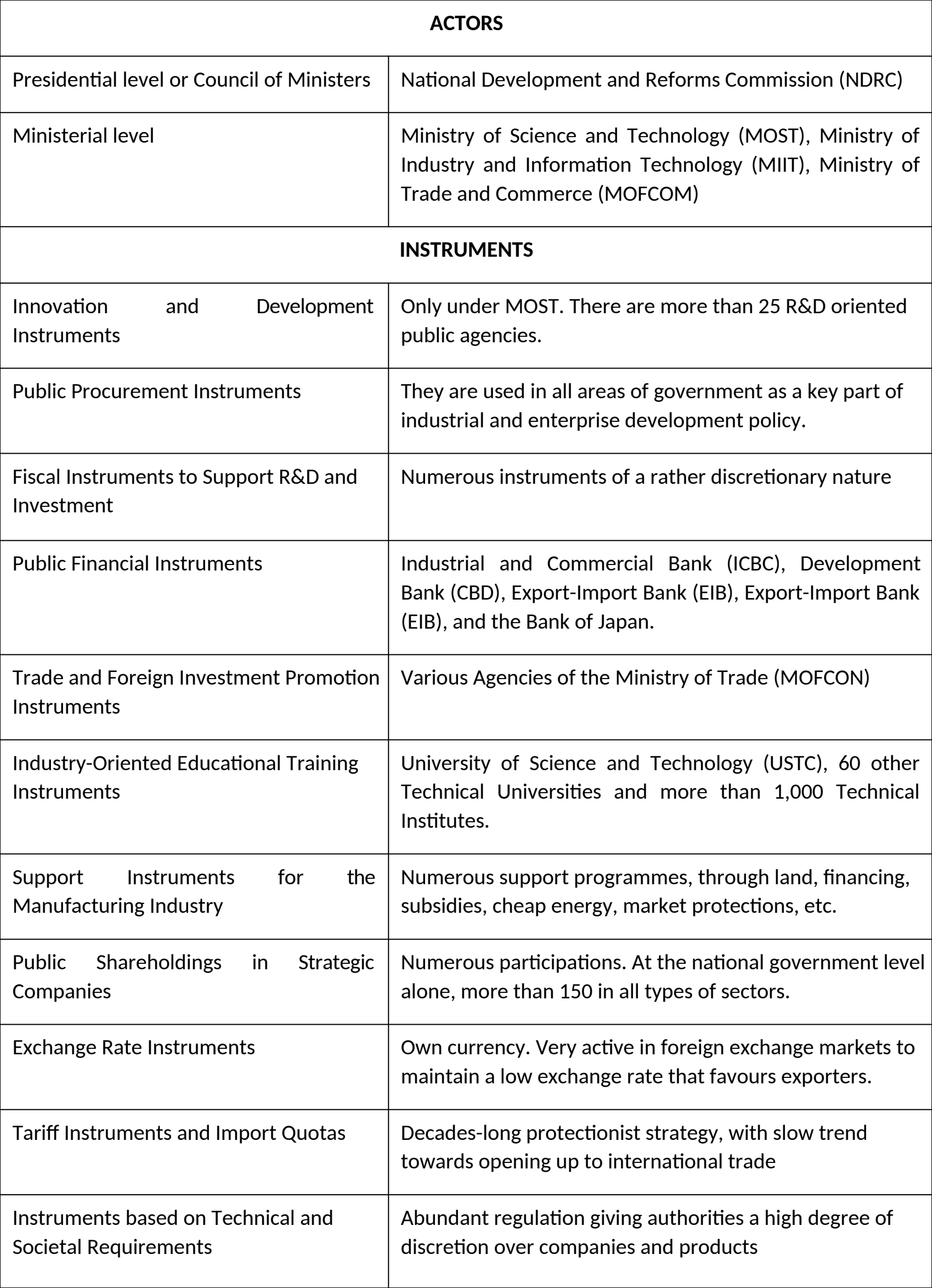
Below is a series of tables with the main industrial policy Actors and Instruments for seven countries considered relevant for their economic importance: Germany, France, the United Kingdom, the USA, Japan, South Korea and China. Two aspects can be seen in these tables: on the one hand, a large part of the Actors and Instruments are common to several countries and, on the other hand, the clear orientation and intensity of Asian countries towards industry.
The permanent updating and deepening of the actors and instruments of other countries will be part of the work agenda of this Chair, in order to serve as a tool for comparison with the actors and instruments of Spain.
In the tab "Manufacturing in figures" you can see some economic indicators of these countries such as GDP per capita, manufacturing gross value added or the export and import of goods, the vast majority of which are manufactured industrial products.